
Stocks waver and oil prices rise after Israeli missile strike on Iran
Direct conflict between Israel and Iran, which threaten global oil supplies and could drive up energy costs, has investors on edge.
Watch CBS News

Direct conflict between Israel and Iran, which threaten global oil supplies and could drive up energy costs, has investors on edge.

"Their job is to protect our investments," said one man whose bank account was drained of $15,000. "Otherwise, what's the point of putting it with a bank?"
Online furniture and home furnishings seller says it is opening a brick-and-mortar location in May.

House Speaker Mike Johnson is including the TikTok divest-or-ban bill in an aid package for Ukraine and Israel.

The U.S. is reaching "peak 65," marking the largest retirement wave in American history. But the financial outlook for many is grim.
Tesla's stock price has tumbled 39% this year amid concerns about the electric vehicle maker's slowing growth.

Organic option is best when buying certain produce, especially blueberries, nonprofit group says in analysis of chemical residues.

Italy joins a long list of countries offering foreigners the opportunity to relocate, laptops in tow.

Health officials are warning consumers not to consume the Infinite Herbs basil sold at Trader Joe's after 12 people were sickened.

Both types of gold assets could be a smart bet in today's economic environment. Here's why.

Considering tapping into your home equity? Here's how much you'd save when compared to your other options.

Are you shopping for long-term care insurance in your 70s? Make these three smart moves.
Tesla accounted for 80% of electric vehicle sales in the U.S. in 2020, but that figure fell to 55% last year.

The generative artificial intelligence boom has led to the emergence of romantic companion bots.

Apple said it will stop selling the devices later this month in order to comply with a U.S. import ban.

Alex Jones, the conspiracy theorist known for his fake news site InfoWars and his false denial of the Sandy Hook massacre, was permanently banned from Twitter in 2018.

More than 90 million consumers will scan a QR code this year. But the technology can also facilitate identity theft.
The billionaire owner of X took a defensive tone, saying that "the whole world will know that those advertisers killed the company."
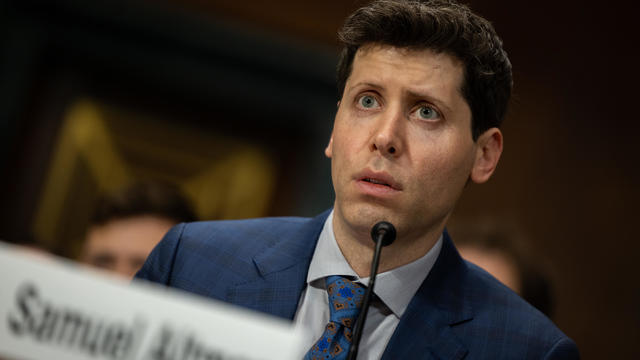
OpenAI co-founder Sam Altman says he's looking forward to returning to the company, with the support of Microsoft's CEO, to build the 2 companies' "strong partnership."
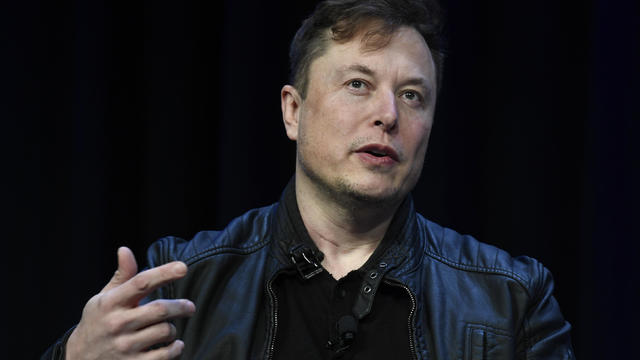
Musk, who is under fire for supporting an antisemitic post, said the money will be donated to hospitals in Israel and to the Red Cross in Gaza.
Altman landed at Microsoft, the biggest investor in OpenAI, as former Twitch leader Emmett Shear was named OpenAI's new chief executive.

Two U.S. officials tell CBS News an Israeli missile has hit Iran in apparent retaliation for the recent drone and missile attack on the Jewish state.
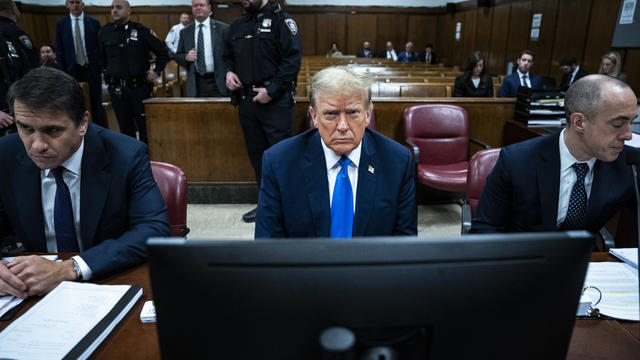
Twelve jurors and one alternate were seated in the first three days of jury selection in former President Donald Trump's New York criminal trial.
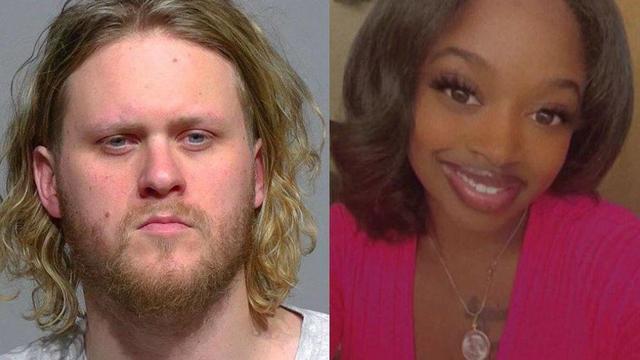
Maxwell Anderson, 33, has been charged with first-degree intentional homicide in the death of 19-year-old Sade Robinson.

A German prosecutor says 2 German-Russian nationals were caught snooping around U.S. military facilities used to train Ukrainian forces.
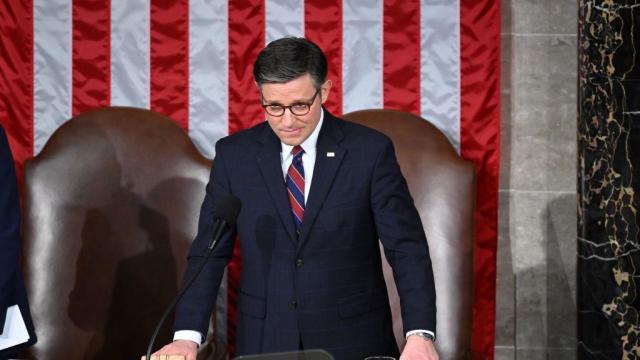
The bills are part of a complicated plan by Speaker Mike Johnson to get badly needed lethal aid to Ukraine, as well as security funding for Israel and Taiwan.
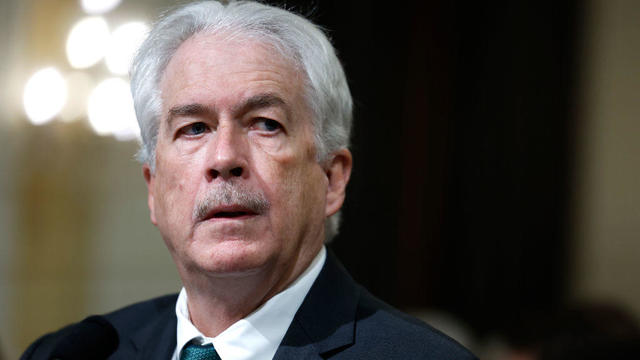
His comments come as a deadlocked Congress continues to stall on Ukraine aid.
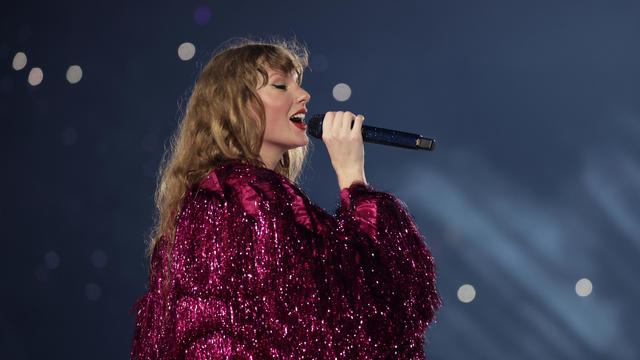
Anticipation was growing at a fever pitch before Taylor Swift's latest album, "The Tortured Poets Department," dropped at midnight EDT. But it turned out it's actually a double album.

Voting has begun in India's national election, the world's biggest exercise in democracy, but there's concern that democratic values are being eroded.
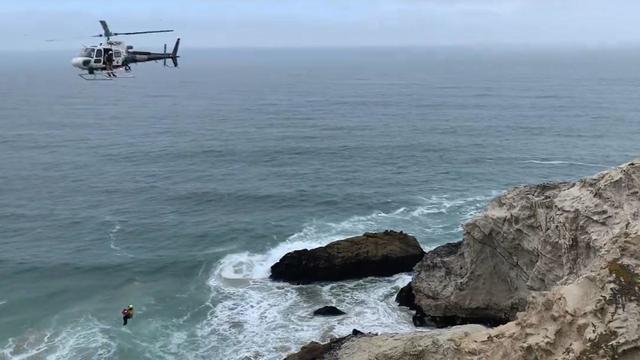
A driver died after his vehicle plunged over a cliff along Highway 1 on the San Francisco Peninsula coast between Pacifica and Half Moon Bay Thursday.
The U.S. is reaching "peak 65," marking the largest retirement wave in American history. But the financial outlook for many is grim.

Americans are underprepared for retirement, with the average account holding just $88,400 in savings.
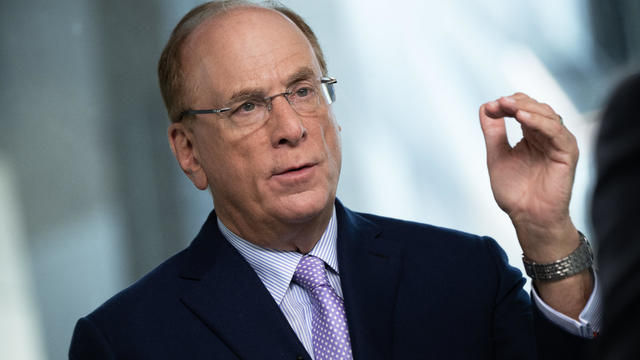
BlackRock CEO Larry Fink said that longer life expectancies are "putting the U.S. retirement system under immense strain."

About 1 in 8 workers think they'll retire by age 61. But the reality of saving for decades of expenses is daunting.

America's retirement system has left behind 90% of workers. "We see big gaps with the rich and the poor in terms of who gets to retire," one expert said.

A look at the features for this week's broadcast of the 2023 News & Documentary Emmy-winner for Outstanding Recorded News Program, hosted by Jane Pauley.
Direct conflict between Israel and Iran, which threaten global oil supplies and could drive up energy costs, has investors on edge.
Twelve jurors and one alternate were seated in the first three days of jury selection in former President Donald Trump's New York criminal trial.
Maxwell Anderson, 33, has been charged with first-degree intentional homicide in the death of 19-year-old Sade Robinson.
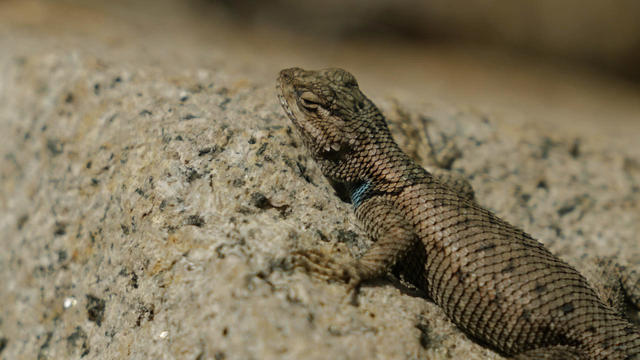
A disappearing lizard population in the mountains of Arizona shows how climate change is fast-tracking the rate of extinction.
Direct conflict between Israel and Iran, which threaten global oil supplies and could drive up energy costs, has investors on edge.

CEO Mark Zuckerberg's newest AI-powered Meta AI agents started venturing into social media this week to engage with real people.

"Ultimately we think this is a better approach that reflects the evolution of the business," Netflix Co-CEO Greg Peters said on an earnings call.
"Their job is to protect our investments," said one man whose bank account was drained of $15,000. "Otherwise, what's the point of putting it with a bank?"
Online furniture and home furnishings seller says it is opening a brick-and-mortar location in May.
Twelve jurors and one alternate were seated in the first three days of jury selection in former President Donald Trump's New York criminal trial.
The bills are part of a complicated plan by Speaker Mike Johnson to get badly needed lethal aid to Ukraine, as well as security funding for Israel and Taiwan.
His comments come as a deadlocked Congress continues to stall on Ukraine aid.
Two U.S. officials tell CBS News an Israeli missile has hit Iran in apparent retaliation for the recent drone and missile attack on the Jewish state.
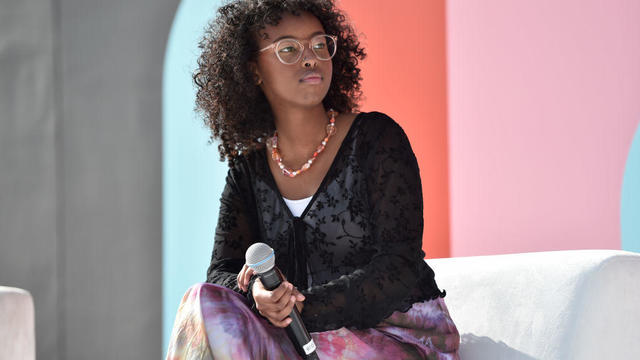
Rep. Ilhan Omar's daughter says she was one of three students suspended from Barnard College following a pro-Palestinian protest at Columbia University on Thursday.
Health officials are warning consumers not to consume the Infinite Herbs basil sold at Trader Joe's after 12 people were sickened.

A landmark review for Britain's National Health Service found young people have been let down by "remarkably weak" evidence backing medical interventions in gender care.
Organic option is best when buying certain produce, especially blueberries, nonprofit group says in analysis of chemical residues.

British lawmakers have backed legislation that would see the legal age to buy tobacco increase by one year every year until it's eventually banned.

A new generation of deodorant products promise whole-body odor protection. Should you try one? Dermatologists share what to know.

Paris police cordoned off an area around an Iranian consulate amid reports of a man threatening to detonate a bomb, but a suspect was quickly detained.
A German prosecutor says 2 German-Russian nationals were caught snooping around U.S. military facilities used to train Ukrainian forces.
The bills are part of a complicated plan by Speaker Mike Johnson to get badly needed lethal aid to Ukraine, as well as security funding for Israel and Taiwan.
His comments come as a deadlocked Congress continues to stall on Ukraine aid.
Two U.S. officials tell CBS News an Israeli missile has hit Iran in apparent retaliation for the recent drone and missile attack on the Jewish state.
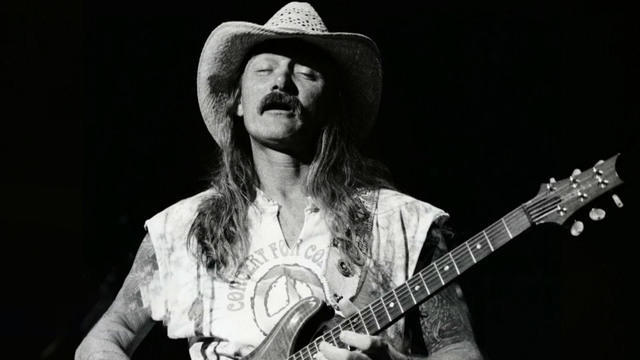
Legendary guitarist Dickey Betts died Thursday at his home in Florida after battling cancer. The Rock ‘N Roll Hall of Famer was 80 years old.
"Ultimately we think this is a better approach that reflects the evolution of the business," Netflix Co-CEO Greg Peters said on an earnings call.
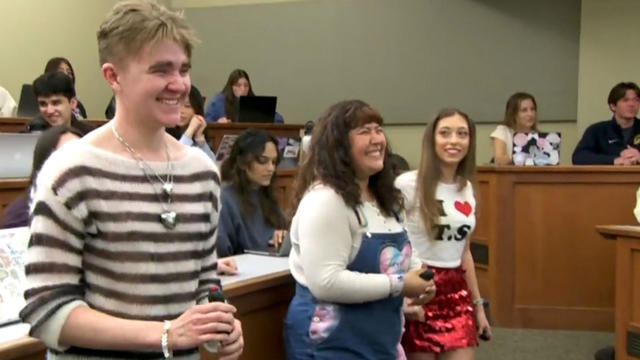
Taylor Swift's successes and failures, including the battle to regain control of her master recordings, are part of the syllabus at the University of California, Berkeley.
Taylor Swift's successes and failures, including the battle to regain control of her master recordings, are part of the syllabus at the University of California, Berkeley. Jo Ling Kent has more.

Dickey Betts, a guitarist and founding member of the Allman Brothers Band, has died at the age of 80 following a battle with cancer. Betts wrote some of the bands biggest hits, including "Ramblin' Man."

A bipartisan group of lawmakers has introduced a bill supporting the development of nuclear fusion power. Hank Jenkins-Smith, professor of public policy at the University of Oklahoma, joins CBS News to discuss.
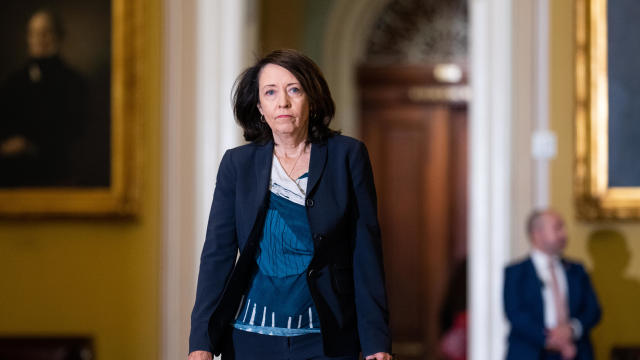
Sen. Maria Cantwell is backing an amended bill that could lead to a ban of TikTok in the U.S.

From labor shortages to environmental impacts, farmers are looking to AI to help revolutionize the agriculture industry. One California startup, Farm-ng, is tapping into the power of AI and robotics to perform a wide range of tasks, including seeding, weeding and harvesting.
U.S. Senators are pressing banks to take more actions to help victims of wire fraud. CBS News national consumer investigative correspondent Anna Werner has more on how Americans are being scammed.

Artificial intelligence has become so advanced it has now surpassed human performance in several basic tasks, according to a new report from Stanford University's Institute for Human-Centered Artificial Intelligence. Russell Wald, deputy director of the institute, joins CBS News to unpack more key findings from the study.

A report from the United Nations determined that 1 million species are threatened with extinction. Dr. John Wiens from the University of Arizona believes that number is far higher based on his research. He says climate change is quickening the threat of extinction for species, including a 3-million-year-old lizard population previously found in the Arizona mountains.
A disappearing lizard population in the mountains of Arizona shows how climate change is fast-tracking the rate of extinction.
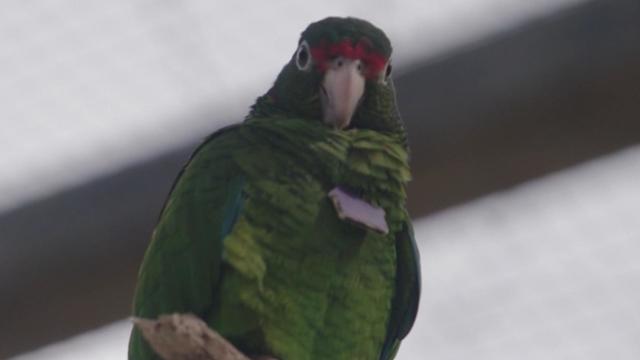
Some of the most critically endangered birds on the planet have been released back into the wild. CBS News national environmental correspondent David Schechter has more on the harsh conditions Puerto Rican parrots face, and the people working to save them.

Scientists are using a range of tools to protect the endangered wildlife that could disappear in coming decades.

A human jawbone containing several teeth was linked to a former U.S. Marine who died almost 75 years ago during a military exercise in California.
Twelve jurors and one alternate were seated in the first three days of jury selection in former President Donald Trump's New York criminal trial.
Maxwell Anderson, 33, has been charged with first-degree intentional homicide in the death of 19-year-old Sade Robinson.

Dennis Dechaine is serving a life sentence for the murder and sexual assault of Sarah Cherry, who disappeared while babysitting in 1988.
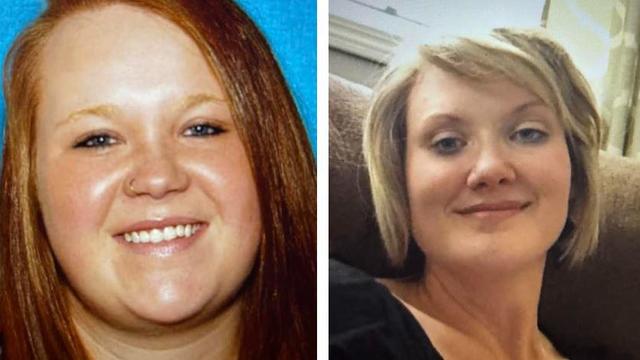
Prosecutors allege one of the suspects, Tifany Adams, provided a statement to law enforcement "indicating her responsibility" in the killings.
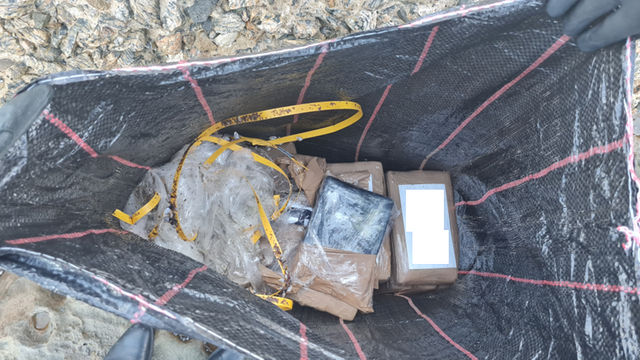
The man faces seven charges related to drug importation and dealing and 12 other charges. He faces life in prison, officials said.
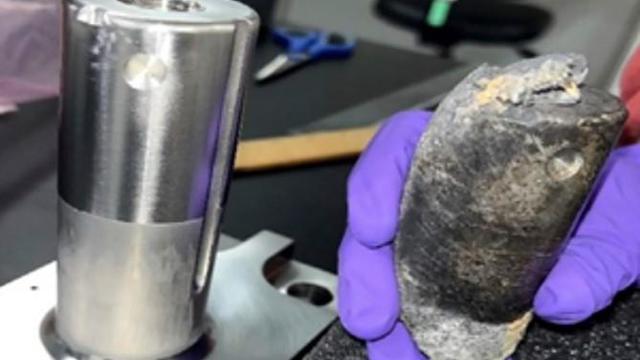
NASA confirmed Monday that a mystery object that crashed through the roof of a Naples, Florida home last month was space junk from equipment discarded by the space station.

NASA said it agrees with an independent review board that concluded the project could cost up to $11 billion without major changes.

It was a "bittersweet moment" as United Launch Alliance brought the Delta program to a close.

NASA flight engineers managed to photograph and videotape the moon's shadow on Earth about 260 miles below them.

Millions of Americans poured into the solar eclipse’s path of totality to watch in wonder. The excitement was shared across generations for the rare celestial event that saw watch parties across the country as almost all of the continental U.S. saw at least a partial solar eclipse.
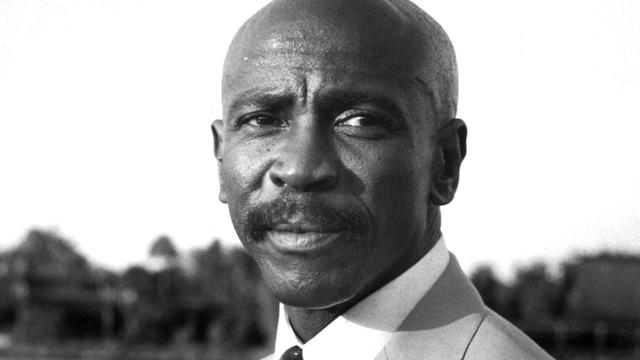
A look back at the esteemed personalities who've left us this year, who'd touched us with their innovation, creativity and humanity.

The Francis Scott Key Bridge in Baltimore collapsed early Tuesday, March 26 after a column was struck by a container ship that reportedly lost power, sending vehicles and people into the Patapsco River.
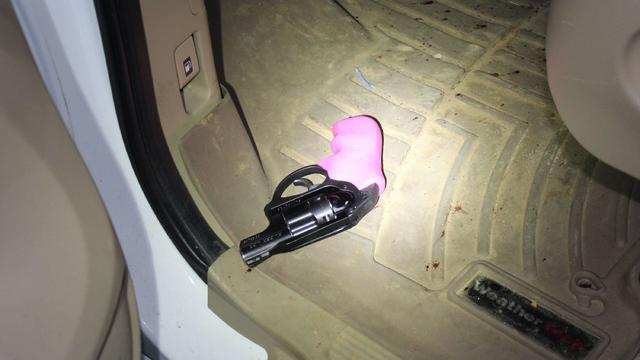
When Tiffiney Crawford was found dead inside her van, authorities believed she might have taken her own life. But could she shoot herself twice in the head with her non-dominant hand?
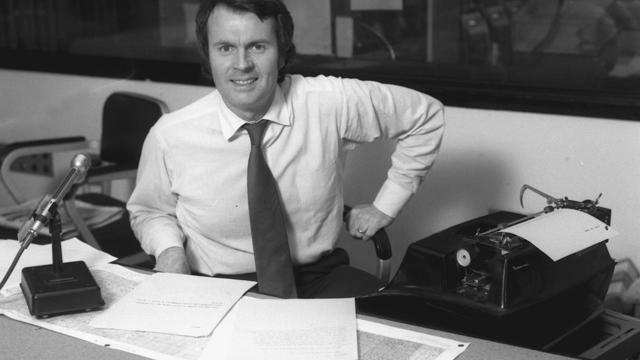
We look back at the life and career of the longtime host of "Sunday Morning," and "one of the most enduring and most endearing" people in broadcasting.

Cayley Mandadi's mother and stepfather go to extreme lengths to prove her death was no accident.
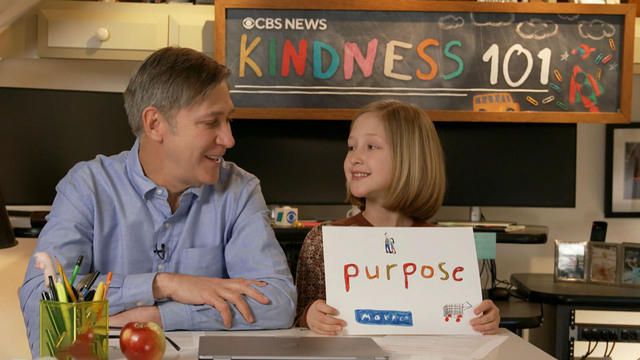
In "Kindness 101," where Steve Hartman and his children share stories built around kindness and character, and the people who've mastered those qualities. Today's lesson is purpose. This week, we find out how one widower was able to find a new purpose in life from an unlikely source.

CBS News' data analysis found 425 bridges in 36 states over waterways used by large vessels had inadequate pier protection.
A report from the United Nations determined that 1 million species are threatened with extinction. Dr. John Wiens from the University of Arizona believes that number is far higher based on his research. He says climate change is quickening the threat of extinction for species, including a 3-million-year-old lizard population previously found in the Arizona mountains.
Legendary guitarist Dickey Betts died Thursday at his home in Florida after battling cancer. The Rock ‘N Roll Hall of Famer was 80 years old.
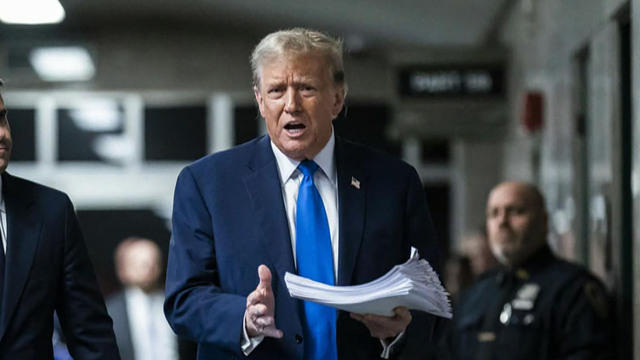
All 12 jurors have been selected in former President Donald Trump’s “hush money” trial. Trump, who has pleaded not guilty to all charges, is accused of falsifying business records to hide an alleged affair with an adult film actor ahead of the 2016 election. The trial could begin as soon as Monday.