
Stock market rout deepens as Dow plunges more than 2,200 points and Nasdaq enters bear market
Stocks continued to tumble in the U.S. Friday as financial markets suffered their biggest two-day selloff since 2020.
Watch CBS News

Stocks continued to tumble in the U.S. Friday as financial markets suffered their biggest two-day selloff since 2020.

Beijing fires back at Trump's latest tariffs with a matching 34% tax on all U.S. imports and tightened export controls on rare earth elements.

U.S. Fed Chair Jerome Powell says the Trump administration's expansive new tariffs will likely lead to higher inflation and slower growth.

Trump hit the small African kingdom of Lesotho with his highest tariff this week at 50%, fueling urgent efforts by the country to seek a deal, and new trade partners.

Hiring rebounded in March, signaling that the labor market remains resilient despite stronger economic headwinds.

Economists say that President Trump's wide-ranging new tariffs raise the risk of a recession or stagflation.

Stock futures are pointing to another major drop in U.S. financial markets as global trade war risks rise.

Thousands of probationary employees were rehired by federal agencies after lawsuits challenging the legality of their terminations. But many of them still aren't working.

President Trump rolled out new tariffs on April 2 aimed at easing trade imbalances. Here's which products could become more expensive as a result.

Don't get caught believing these four misleading myths about what debt forgiveness can and can't do.

A $15,000 HELOC comes with affordable monthly payments that could soon become cheaper. Here's what to know.

Looking for reliable ways to protect your money during today's economic uncertainty? Here's how gold could help now.
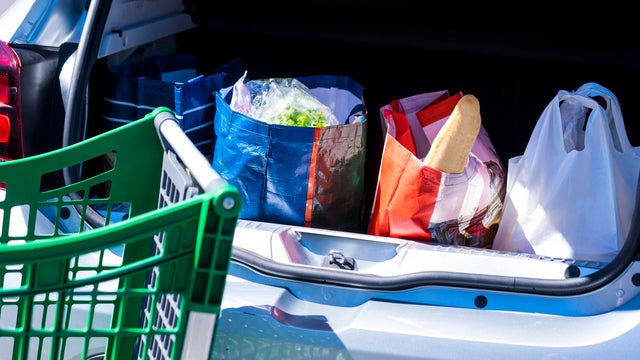
CBS News is tracking the rising cost of products most impacted by tariffs imposed and soon-to-be-imposed by President Trump, from grocery items to cars and trucks.

These charts track prices consumers pay for groceries and other goods now compared to five years ago.

The first weeks of the new Trump administration have sparked stock market jitters and recession fears. Here's advice from top experts.

Most Americans are forced to retire earlier than they had expected, often disrupting their financial planning.

The Social Security Fairness Act, which would increase benefits for 2.8 million retirees, has bipartisan support but time running out.

President Trump has painted a bullseye on diversity, equity and inclusion. But what exactly is DEI, and what has it achieved?

Ample job opportunities, low unemployment and reasonable commute times make this the top U.S. state for job seekers, analysis finds.

Chipotle plans to deploy a conversational AI hiring system, dubbed "Ava Cado," across more than 3,500 restaurants.

State officials say they will lose funds for summer reading programs, book-mobiles, rural internet and more.

President Trump's tariffs have sent markets spiraling and shockwaves through the American economy.

The additional layoffs at the National Institutes of Health come less than a week after the initial wave of cuts in Secretary Robert F. Kennedy Jr.'s restructuring.

The Cybersecurity and Infrastructure Security Agency is charged with protecting election security infrastructure.

The Supreme Court divided 5-4 in granting a DOJ request to pause a lower court order requiring the Education Department to reinstate grants to universities and nonprofits.
President Trump's tariffs have sent markets spiraling and shockwaves through the American economy.

A deal to sell the widely popular platform remains a work in progress.
U.S. Fed Chair Jerome Powell says the Trump administration's expansive new tariffs will likely lead to higher inflation and slower growth.
Trump hit the small African kingdom of Lesotho with his highest tariff this week at 50%, fueling urgent efforts by the country to seek a deal, and new trade partners.

Stocks continued to tumble in the U.S. Friday as financial markets suffered their biggest two-day drop since 2020.
State officials say they will lose funds for summer reading programs, book-mobiles, rural internet and more.
President Trump's tariffs have sent markets spiraling and shockwaves through the American economy.
The additional layoffs at the National Institutes of Health come less than a week after the initial wave of cuts in Secretary Robert F. Kennedy Jr.'s restructuring.
The Cybersecurity and Infrastructure Security Agency is charged with protecting election security infrastructure.
The Supreme Court divided 5-4 in granting a DOJ request to pause a lower court order requiring the Education Department to reinstate grants to universities and nonprofits.
The additional layoffs at the National Institutes of Health come less than a week after the initial wave of cuts in Secretary Robert F. Kennedy Jr.'s restructuring.

Department of Health and Human Services Secretary Robert F. Kennedy Jr. said Thursday that he expects about 20% of fired employees may have been cut by mistake, and some could be brought back, following widespread layoffs directed by the Department of Government Efficiency.

Multiple FDA labs were cut amid Health and Human Services Secretary Robert F. Kennedy Jr.'s layoffs this week.

In November 2024, Norton West became the first hospital to open in Louisville's majority-Black West End neighborhood in more than 150 years.

Health and Human Services Secretary Robert F. Kennedy Jr. said the CDC's lead poisoning program will be reinstated.

A British anti-abortion rights activist whose case caught the Trump administration's attention has been fined for breaching a "buffer zone" law.

Once-powerful Cardinal Theodore McCarrick was defrocked by Pope Francis in 2019 after an investigation into sexual abuse.

NATO Secretary General Mark Rutte told CBS News' Margaret Brennan that "Russia really has to do more to bring this war to an end."

A mine-sniffing African giant pouched rat named Ronin has been acknowledged by the Guinness World Records.
Trump hit the small African kingdom of Lesotho with his highest tariff this week at 50%, fueling urgent efforts by the country to seek a deal, and new trade partners.

Want to catch the 2025 NCAA March Madness championship games? Here's how and where to watch them live.

Looking for the 2025 NCAA March Madness Final Four schedule? Here's how to stream the men's and women's games.

In his new memoir, the chef and founder of the humanitarian aid organization World Central Kitchen offers life lessons and teachable moments about responsibility and commitment to a shared humanity.

Fresh off his role in "Gladiator 2," Fred Hechinger stars in a horror-comedy set at summer camp. He joins "CBS Mornings" to talk about his new film and the wild twists it takes.
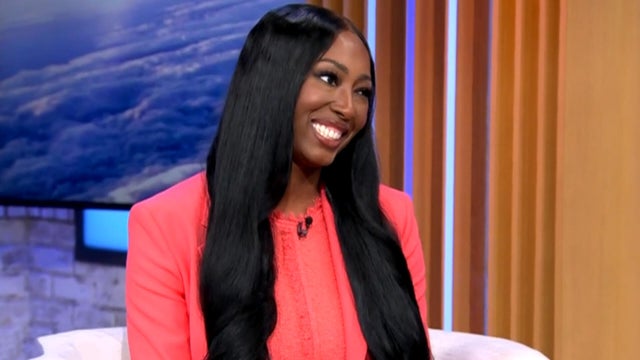
Aerospace engineer Aisha Bowe opens up about joining the historic all-female Blue Origin space flight.

Nintendo has unveiled its next console, the Switch 2. Washington Post reporter Gene Park joins "The Daily Report" to discuss the new user experience, the price and possible security concerns.

Amazon has expressed interest in buying TikTok ahead of deadline for ByteDance to sell the social media app or face a U.S. ban.

From labor shortages to environmental impacts, farmers are looking to AI to help revolutionize the agriculture industry. One California startup, Farm-ng, is tapping into the power of AI and robotics to perform a wide range of tasks, including seeding, weeding and harvesting.

CBS News Confirmed looks at why users are flocking to RedNote, the new Chinese app raising red flags over data privacy and propaganda, as TikTok faces a potential U.S. ban.

As cryptocurrency and artificial intelligence advancements are made, U.S. demand for the energy needed to power massive mining and data centers grows. David Turk, former deputy secretary of the U.S. Department of Energy, joins "The Daily Report" to discuss how much energy the U.S. needs and the potential environmental impacts.

Primates possess special anatomical structures in their throats called vocal membranes, allowing for yodeling at higher octaves, researchers found.

SpaceX's third all-civilian privately chartered flight was the first to carry a crew into polar orbit.

From breaking records to breaking barriers, astronaut Peggy Whitson shares what it feels like to see Earth from space.

Experts at the Vienna Museum provided a public presentation of the mass grave this week, which had the bodies of more than 100 people.

Originally scheduled for just 8 days aboard the International Space Station, the two astronauts spent over 9 months in orbit due to delays with their Boeing Starliner return. Now back on Earth, they share how they coped, what they missed most, and how the mission unexpectedly became political.

The Korea Coast Guard said they had found two tons of what they suspect to be pure cocaine on a Norwegian-flagged ship.

Comedian and actor Russell Brand has been charged in the U.K. with several counts related to rape and sexual assault allegations, London's Metropolitan Police announced. This comes after claims by four women emerged in 2023. CBS News' Holly Williams reports.

British actor and comedian Russell Brand has been charged with multiple counts of rape and sexual assault, London police said.

Arul Carasala was shot and killed by a man who approached him at his parish rectory in Seneca, Kansas, church officials said.

The brutal killings of two students within days of each other have unleashed a wave of anger and calls for a "cultural revolution" against violence towards women.

A wealthy bitcoin entrepreneur and three other adventurers returned to Earth aboard a SpaceX Crew Dragon capsule after 55 passes above the North and South Poles. CBS News' Bill Harwood has more.
SpaceX's third all-civilian privately chartered flight was the first to carry a crew into polar orbit.

The dust devil was about 210 feet wide, NASA said, but likely didn't last long after consuming the smaller whirlwind.
Former NASA astronaut Peggy Whitson, who has completed 10 spacewalks and spent 675 days in orbit, joins "CBS Mornings" to reflect on her historic career and upcoming induction into the Hall of Fame.
Aerospace engineer Aisha Bowe opens up about joining the historic all-female Blue Origin space flight.

A look back at the esteemed personalities who've left us this year, who'd touched us with their innovation, creativity and humanity.

A look into a grieving husband Jan Cilliers' investigative work after his wife Christy Giles and her friend Hilda Marcela Cabrales died after a night out.

Peterson's death sentence for the murder of his pregnant wife Laci has been overturned. Now his supporters are pushing for a complete retrial.

The seesaw marriage between the former ballerina and her much older husband only lasted four years, until she shot him on Sept. 27, 2020.

Cayley Mandadi's mother and stepfather go to extreme lengths to prove her death was no accident.

A federal judge on Friday ordered the return of a Maryland man mistakenly deported to El Salvador. CBS News Department of Justice reporter Jake Rosen has the details.

Wall Street took another dive on Friday as the fallout from President Trump's steep tariffs continued. CBS News' John Dickerson anchors a special report.
Department of Health and Human Services Secretary Robert F. Kennedy Jr. said Thursday that he expects about 20% of fired employees may have been cut by mistake, and some could be brought back, following widespread layoffs directed by the Department of Government Efficiency.

President Trump says he will sign an executive order extending ByteDance's time to find an American buyer for its popular social media app TikTok. CBS News' Jo Ling Kent reports.

Federal Reserve Chair Jerome Powell said higher inflation and slower growth are more likely as more details emerge about President Trump's tariffs. CBS News contributor Javier E. David has more.